

"Skrzydlaci" – 90 years of designing and building gliders in Bielsko-Biała.
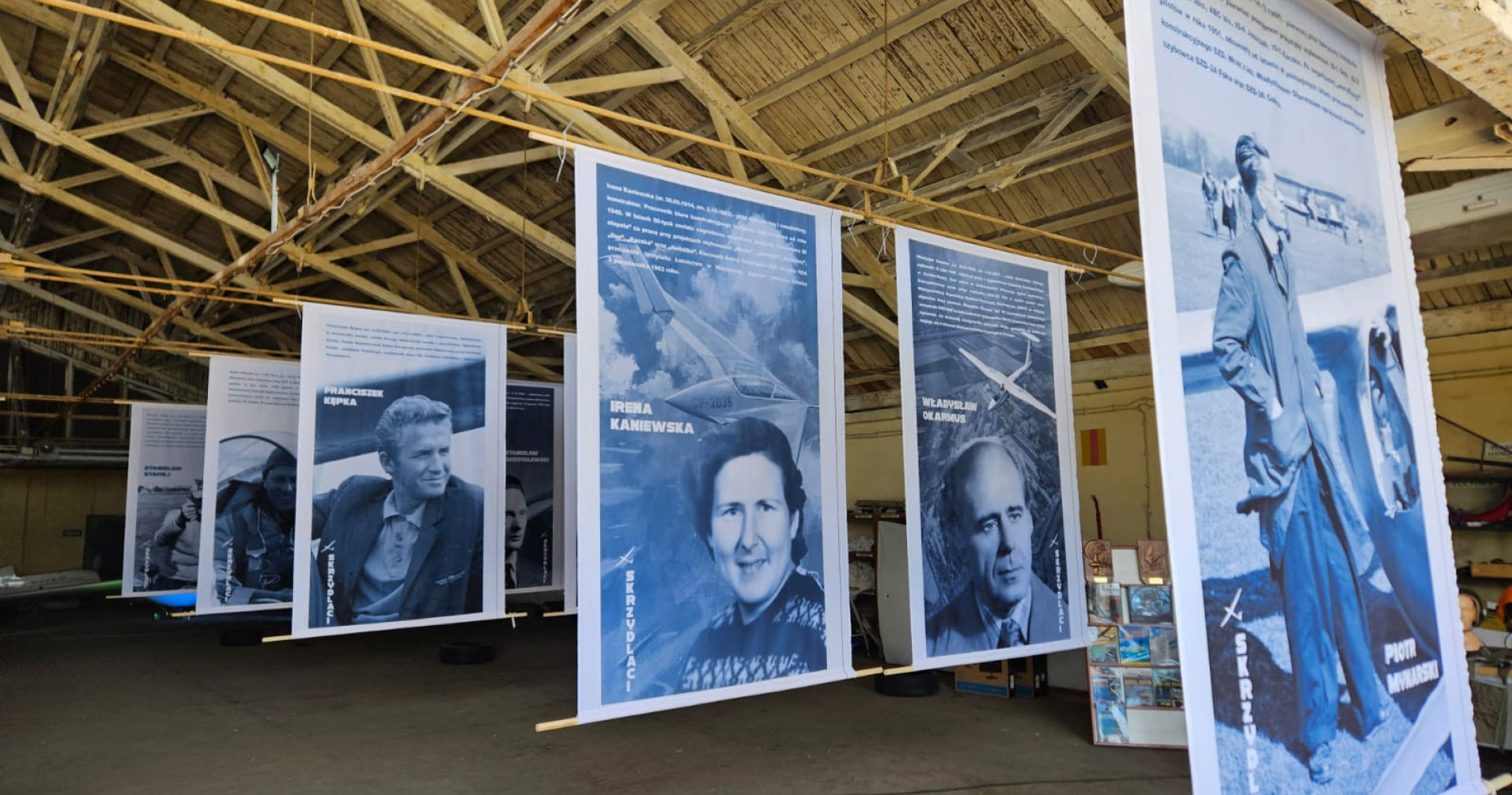


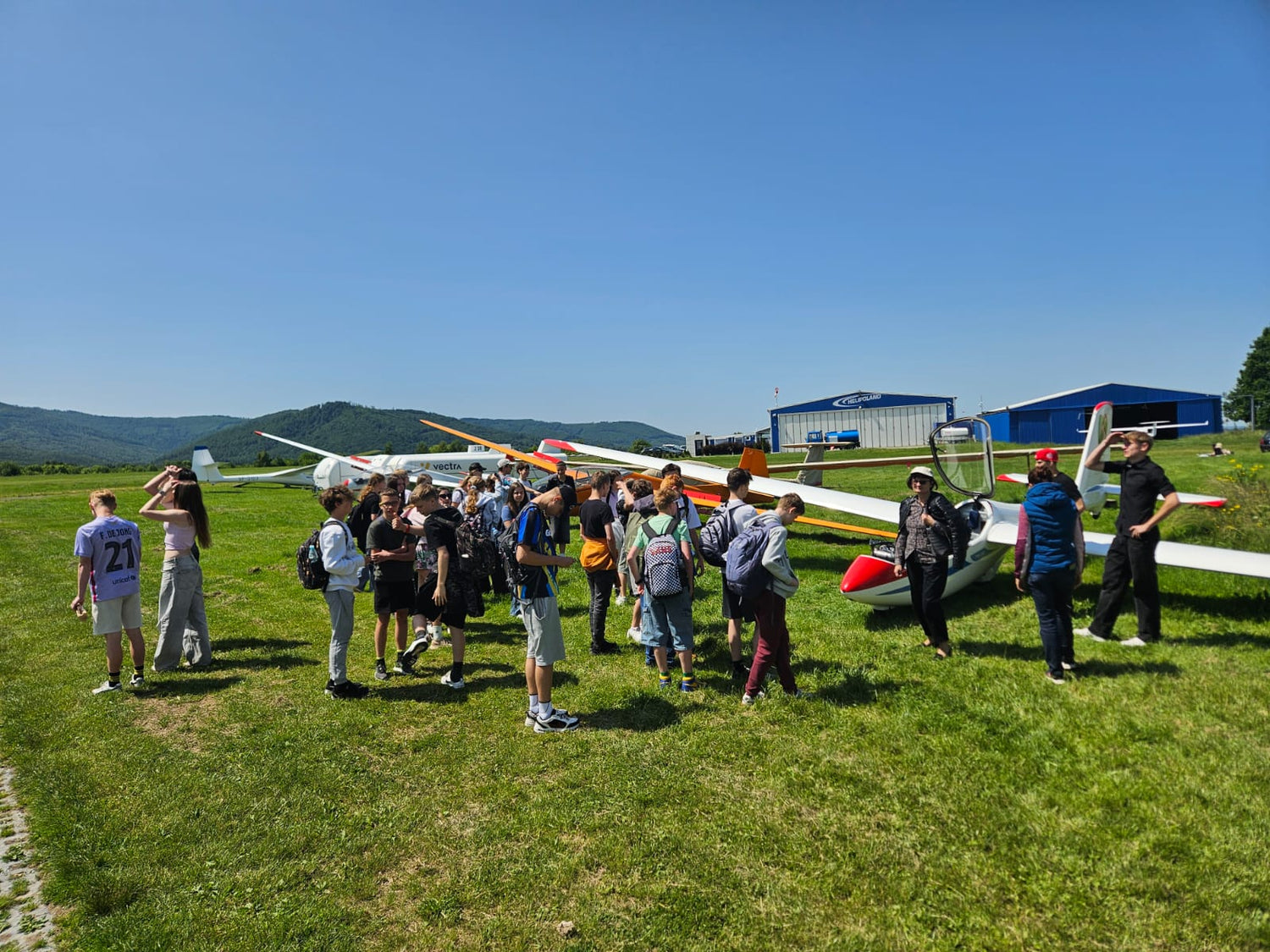
"Skrzydlaci" (The Winged Ones) is a unique artistic and historical project that arose from a deep desire to preserve from oblivion an incredibly important and often underappreciated chapter in the history of Bielsko-Biała and Polish gliding. The exhibition paid tribute to the people who, for nine decades, with passion, courage, and vision, shaped the development of glider aviation – inventors, designers, engineers, and pilots whose work not only enabled soaring but also laid the foundations of technical culture, aviation education, and local identity.
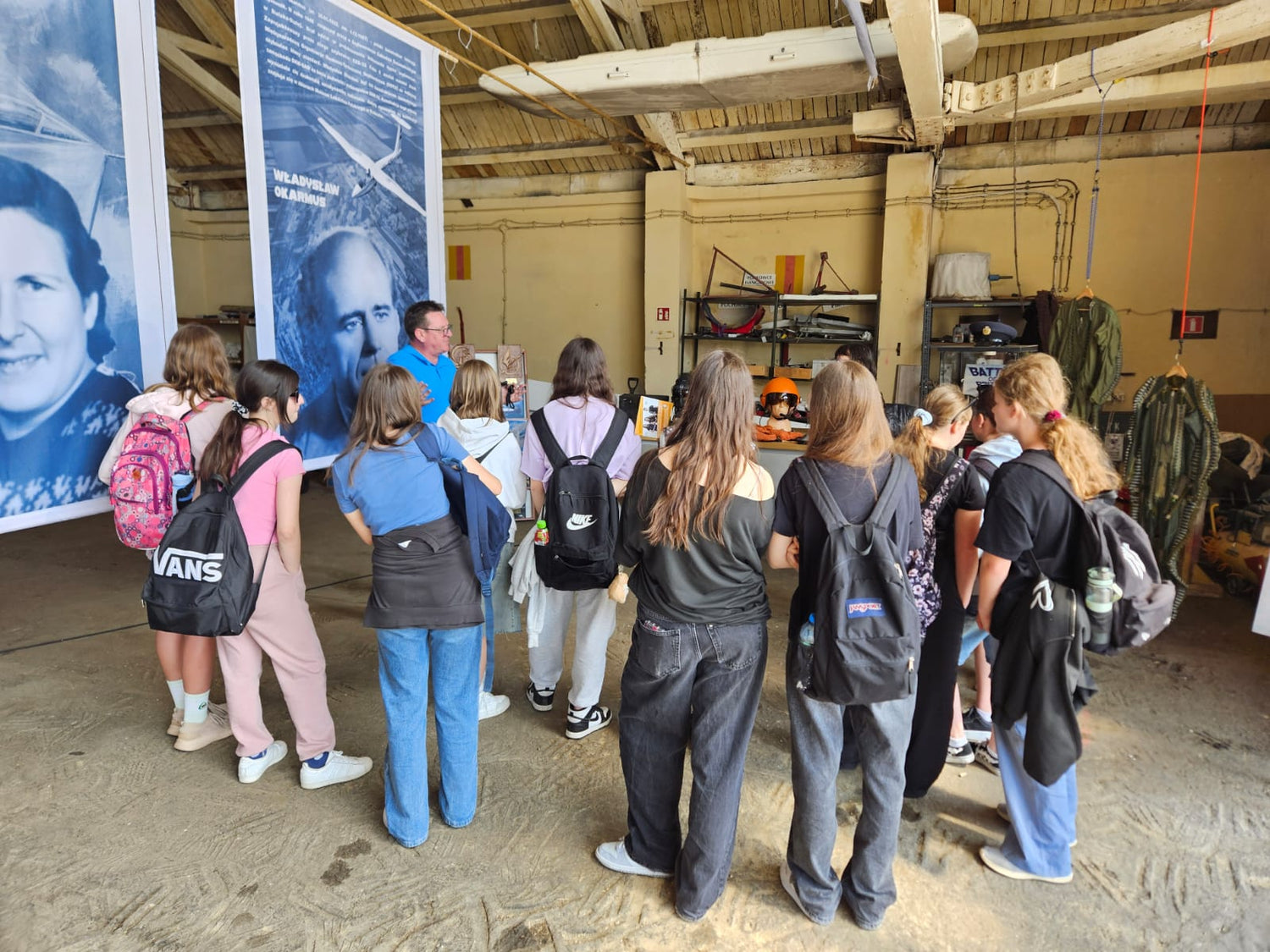
The project was multimedia and artistic in nature, combining large-format fabrics with archival photographs, documents, and memories, creating a space that not only told a story but also experienced it – emotionally, visually, and symbolically.
Located on the grounds of the Bielsko-Biała Aeroclub airfield, the exhibition blended seamlessly with the natural landscape of the Beskid Mountains, which for decades witnessed the birth and development of Polish gliding. It was here that the first gliders were built, pioneering flights took place, successive generations of pilots were trained, and the local community thrived on the rhythm of aviation events, competitions, and the daily work of the glider club.
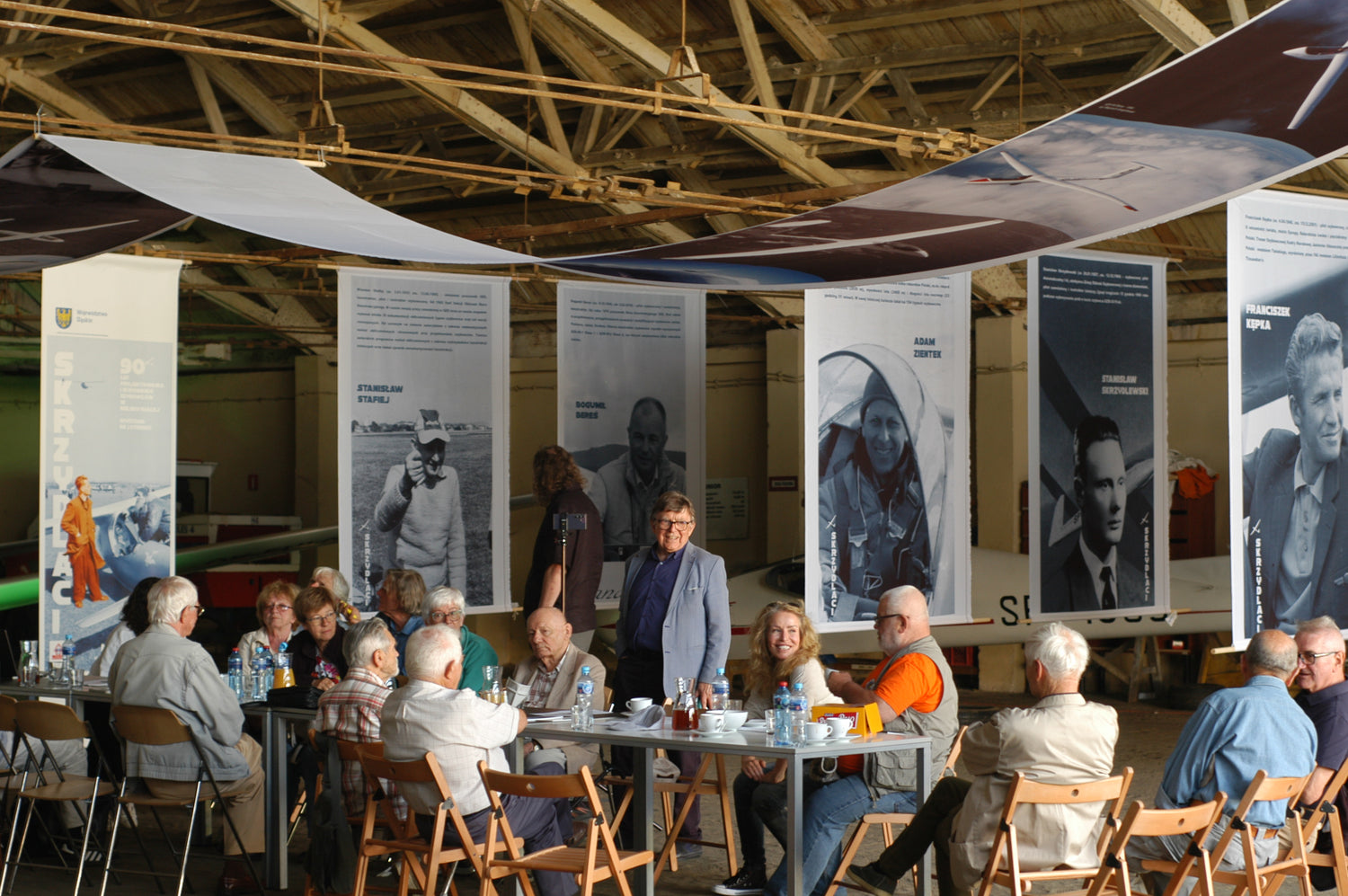
"Skrzydlaci" is not only an attempt to reconstruct this history, but also to reinterpret it – showing that gliding is not only a technique and sport, but also an art, a philosophy of space, a metaphor for freedom and dreams.
The project aimed to revive the memory of people who for years remained in the shadow of grand narratives, yet whose contribution to the development of the region and the country was invaluable. The exhibition was intended to inspire, educate, and integrate. It is an invitation to reflect on how local stories intertwine with the history of the country, how technology can coexist with art, and how the past can become a source of strength for the future. "Skrzydlaci" is also an expression of respect for those who dared to soar beyond the horizon—literally and symbolically—and left behind a legacy that deserves to be remembered, recognized, and continued.
Virtual album
-
Piotr Mynarski
Vendor:SkrzydlaciRegular price 0,00 złRegular priceUnit price per -
Władysław Nowakowski
Vendor:SkrzydlaciRegular price 0,00 złRegular priceUnit price per -
Irena Kaniewska
Vendor:SkrzydlaciRegular price 0,00 złRegular priceUnit price per -
Władysław Okarmus
Vendor:SkrzydlaciRegular price 0,00 złRegular priceUnit price per -
Franciszek Kępka
Vendor:SkrzydlaciRegular price 0,00 złRegular priceUnit price per -
Stanisław Skrzydlewski
Vendor:SkrzydlaciRegular price 0,00 złRegular priceUnit price per -
January Roman
Vendor:SkrzydlaciRegular price 0,00 złRegular priceUnit price per -
Adam Zientek
Vendor:SkrzydlaciRegular price 0,00 złRegular priceUnit price per -
Wiesław Stafiej
Vendor:SkrzydlaciRegular price 0,00 złRegular priceUnit price per -
Bogumił Bereś
Vendor:SkrzydlaciRegular price 0,00 złRegular priceUnit price per
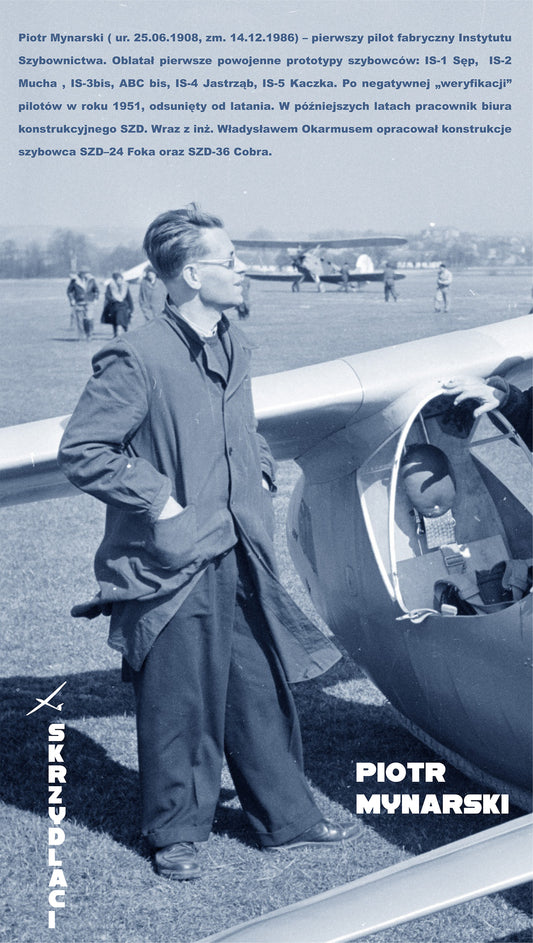


"Skrzydlaci" - leading figures in the history of gliding in Bielsko-Biała.
The Podbeskidzie region and Cieszyn Silesia's connection with gliding dates back to the early 1930s. It was in the Beskid Mountains that new gliding sites were established. During this period, members of the Aviation Association of the Lviv Polytechnic, participating in an expedition seeking gliding sites, positively assessed Mount Żar as an ideal location for bungee launches and sailing flights.
In 1933, thanks to engineer Tadeusz Chlipalski, engineer Wacław Czerwiński from Lviv visited Mount Chełm and took measurements and photographic documentation of the site, allowing the registration process to begin. These efforts resulted in its registration by the Civil Aviation Department of the Ministry of Communications. The official opening of the Gliding School of the Silesian Aeroclub in Goleszów took place on July 15, 1934.
It was thanks to the development of gliding, which required repair facilities, that we can trace the beginning of glider production in the Podbeskidzie region. A pioneer in this endeavor was engineer Tadeusz Chlipalski, who, in the workshops of the Bielsko Industrial School, with the participation of members of the school's Gliding Club, began building the CWJ bis SKAUT glider, designed by engineers Wacław Czerwiński and Władysław Jaworski. Thanks to the efforts of engineer Tadeusz Chlipalski, the Silesian Glider Workshops were established in 1935. Located at 15 Górska Street in Bielsko (now Michałowicza Street),
The workshops were engaged in the construction and repair of gliders and the production of trolleys for transporting gliders.


Undoubtedly, an important event influencing the further development of aviation in the region was the construction of the airport and the opening of the LOPP Pilot School in Aleksandrowice in 1936.


A milestone that contributed to our city's recognition as a major center of the post-war glider industry was the decision by the Minister of Communications to establish the Gliding Institute on January 25, 1946. In 1948, engineer Władysław Nowakowski became the director of the Gliding Institute and headed it for nearly 30 years, until 1977.
On October 5, 1948, the Gliding Institute was renamed the Gliding Experimental Station. Thanks to the revival of aviation education in Poland, the Gliding Institute began to recruit new employees, engineers, and technicians who had completed their training in the postwar period.
In 1948, on the initiative of SZD, a mechanical and aviation technical school was established in Bielsko, which was a breeding ground for staff for the developing enterprise.
In 1963, following the liquidation of the management of the Sports Aviation Equipment Plant in Warsaw, SZD resumed operations under the name "Zakłady Szybowcowe Delta – Bielsko." After many years of organizational changes, in 1975 all the branches operating within SZD were merged, leading to the establishment of the "Przedsiębiorstwo Doświadczalno-Produkcyjne Szybownictwa PZL-Bielsko" (Experimental and Production Company of Gliding PZL-Bielsko).

In 1999, PDPSz PZL-Bielsko ceased operations. Unfortunately, the bankruptcy of the plant marked the end of a successful chapter in the Polish glider industry.
During its operation, the plant produced over 5,000 gliders, setting standards in glider construction for many years.
Polish glider pilots have won countless medals at the World Championships and European Championships in gliders with the SZD badge, and have broken many gliding records.
This success would not have been possible without the people associated with SZD. It would be impossible to mention in such a short description all the "Winged Ones" whose work contributed to the rapid development of sports aviation, gliding, and the glider industry in our region.

The "Skrzydlaci" project is an attempt to remind us that behind all the successes of Polish gliding there are people.
It was the designers, technicians, pilots and plant workers who created the legend of gliders with the SZD badge.
I hope that the work initiated by the People-Innovations-Design Foundation, the aim of which is to bring the "Skrzydlaty" (Winged Ones) closer to a wide audience, will result in strengthening knowledge about their achievements.

Prepared by: Ireneusz Żołnierczyk
A trained airframe technician, former glider pilot, aviation enthusiast, and aviation bibliophile, his aviation library currently includes nearly 4,000 books , periodicals, and technical documentation for aircraft.