The water you touch in the river is the last of what has passed and the beginning of what will come; so too is the present." This idea of Leonardo da Vinci is about action stemming from the past and resulting in the future. The Renaissance designer is aware of the illusion of time. The importance of history seems obvious, but understanding it is not always possible. Meanwhile, knowledge from there can help solve the problems of the future. The legacy of experiences and creative achievements of ancestors can inspire because it is part of the shared river of time. Can the legacy of ancestors' creative energy inspire responsible design?
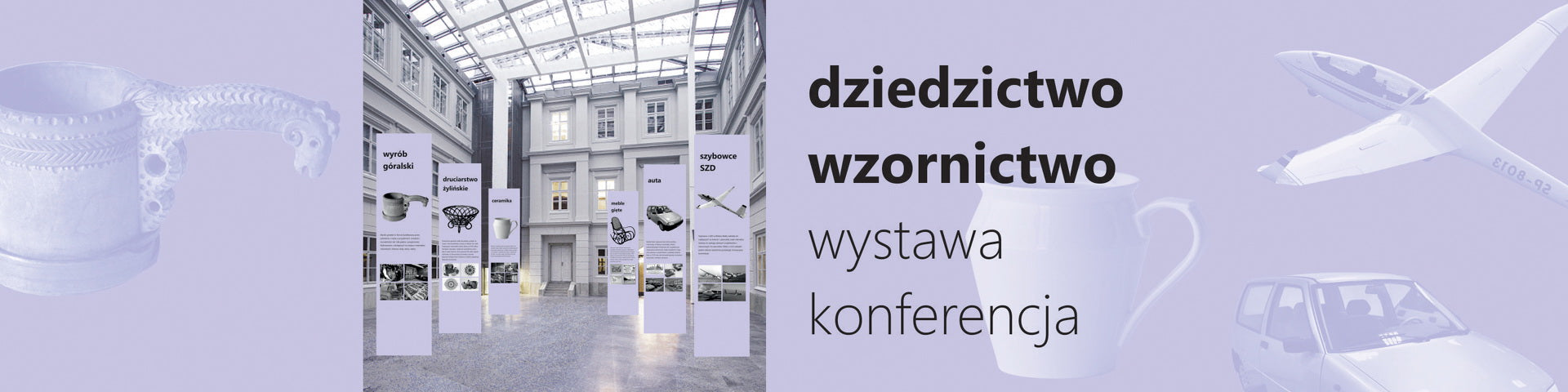
The Arting 2020 "Heritage" project is the latest edition of the competition addressing the topic of sustainable design and the first to explore the connections between heritage and contemporary design. It consists of three stages. The first consists of expert analyses to help participants select design themes. The second stage is the announcement of a sustainable design competition in three categories: heritage, environment, and technology. The third stage consists of two exhibitions, one presenting the designs submitted to the competition and the other presenting the results of expert research titled "Heritage Design." The exhibition opening is accompanied by a conference.
This study attempts to define the area within which designers wishing to address heritage issues in sustainable design will have to navigate. Several topics from the history of design in the Polish-Slovak border region of the Beskid Euroregion were initially selected. Expert articles were also requested on several of these topics: prehistory, highlander culture, Bielsko wool, and cars. The collected material aims to clarify the topic and provide links and references to further texts, specialists, and websites.
Definitions
Cultural heritage
The definition of cultural heritage states that it is: (…) the resource of immovable and movable things, together with the associated spiritual values, historical phenomena, and customs recognized as the basis for legal protection for the good of a given society and its development, and for passing them on to future generations, due to understandable and accepted historical, patriotic, religious, scientific, and artistic values, significant for the identity and continuity of political, social, and cultural development, proving truths and commemorating historical events, cultivating a sense of beauty and civilizational community… (Prof. Jan Pruszyński, monograph "Dziedzictwo kultury Polski" [Polish Cultural Heritage], 2001). A distinction is made between tangible and intangible heritage.
Tangible cultural heritage is divided into immovable heritage, which includes buildings, which may themselves contain installed art such as organs, stained glass, and frescoes, large industrial installations, or other historic sites; and movable heritage, which includes books, documents, works of art, movable machinery, clothing, and other artifacts considered worthy of preservation for the future. These include objects significant to archaeology, architecture, science, and technology of a specific culture. Intangible cultural heritage consists of non-physical aspects of a given culture. The concept also encompasses modes of behavior in society, and often formal rules operating within a specific cultural context. These include social values and traditions, customs and practices, aesthetic and spiritual beliefs, artistic expression, language, and other aspects of human activity. The significance of physical artifacts can be interpreted in the context of the socioeconomic, political, ethnic, religious, and philosophical values of a specific group of people. Naturally, intangible cultural heritage is more difficult to preserve than physical objects. Aspects of preserving and protecting intangible cultural values include folklore, language preservation, and natural monuments.
Sustainable design.
Sustainable design means designing with the principles of sustainable development in mind. It means ecological design that does not damage the environment and is responsible for future generations. Sustainable design aims to ensure durability and longevity of products, the use of renewable resources, recyclability, energy efficiency, pro-social thinking, and ecology. The design of products and services should be consistent with the principles of economic, social, and ecological sustainability. The 4 Rs (reduse, reuse, recycle, renewable) rule states that when designing sustainably, one should: reduce (needs, raw materials, energy), reuse, renew, and recycle.
Projects
There are many definitions of design, but for the purposes of this paper, a simplified version is adopted: "design is the idea of future objects and activities in a way that is consistent with human needs." It is important to emphasize that design should have the well-being of humans in mind. To come up with a good design, one must thoroughly understand the causes and effects of its implementation.
Sustainable development
The most well-known definition of sustainable development comes from a 1987 UN report titled "Our Common Future" and states: "At the current level of civilization, sustainable development is possible; that is, development in which the needs of the present generation can be met without compromising the ability of future generations to meet their own needs." A popular model of civilizational sustainability is known as the 3 P model, which means striving for a balance between three elements: planet – people – profit. It emphasizes that excessive emphasis on profit comes at the expense of the planet and people.
Project sustainability
Durability, continuity, and longevity are hallmarks of sustainable design. We can speak of longevity if an object lasts a long time. Not only as an individual element, but also as part of a family. Something is good because it embodies the characteristics of its predecessors and the potential to be utilized in the future. This is because the designer's consciousness touches the past and anticipates the future. They can draw on a database of things and processes that have occurred and incorporate their own design into it, understanding the responsibility this carries.